CANTABRIA | CHARMING VALLEYS AND VILLAGES
CANTABRIA THROUGH ITS VALLEYS AND CHARMING VILLAGES
Each one, with its own unique character, offers reasons to return.
Cantabria boasts an endless geography: roads that climb and descend, valleys that open up suddenly, villages that appear unexpectedly nestled among mountains or along the coast. Liérganes, Comillas, Santillana, the Pasiego valleys, the Liébana valley… None are alike. And in each one, there is something that justifies a detour.
SANTOÑA
20 minutes from Las Cinco Calderas
Santoña is a seaside town, a town known for its anchovies, and a mountainous area all in one. Three distinct activities that fit perfectly into a single day.
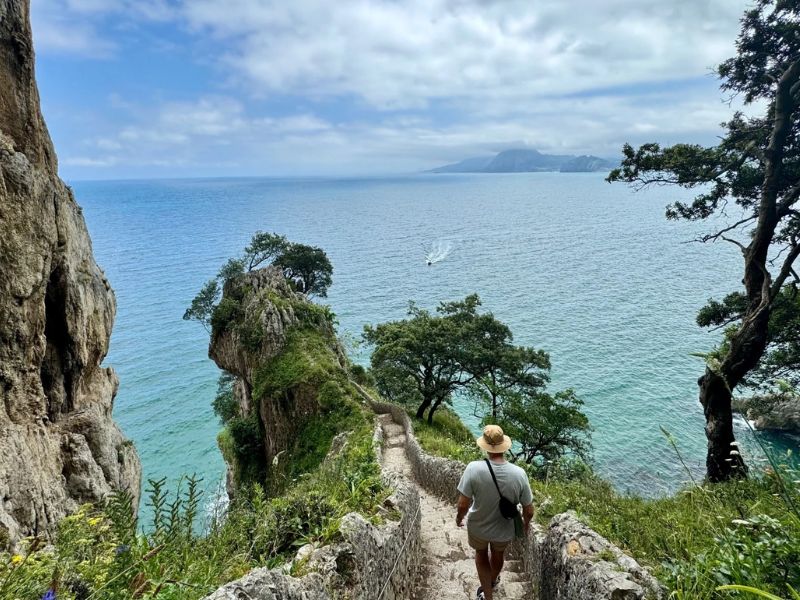
The most challenging and memorable is the climb to the Faro del Caballo (Horse Lighthouse) via Monte Buciero: a circular route of about 12 kilometers that circles the peninsula and descends to the lighthouse via a staircase of 763 practically vertical steps. It’s not a stroll: you should be in good shape, wear appropriate footwear, and bring water. During peak season, access is regulated and requires prior reservation. For those who prefer to see it without the stairs, there are guided boat trips from the port that skirt the cliffs of Buciero and approach the lighthouse from the water: a different and perfectly valid perspective.
Descending to the town, the bay opens up towards the imposing La Salvé beach in Laredo, a view that’s hard to look away from. Just outside Santoña, you’ll find Berria: two long kilometers of golden sand and open sea.
LIÉRGANES
20 minutes from Las Cinco Calderas
Liérganes is a river town, not a seaside town. And it has a different scale: more intimate, greener, without monuments that force you to take out your camera every ten meters.
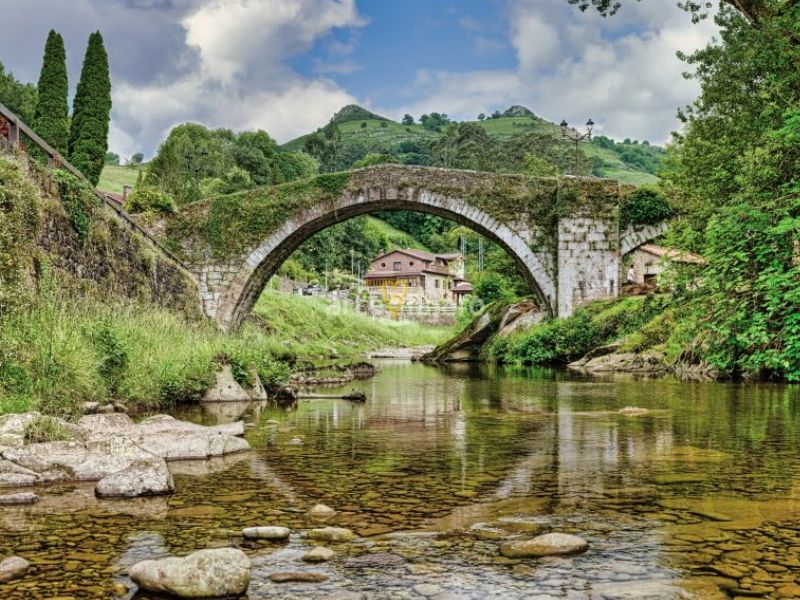
Its most iconic spot is the Puente Mayor (Main Bridge) from 1606, beneath which rests a solitary and pensive statue: the fish-man. Legend has it that in the 17th century, a local man went for a swim and never returned. Years later, he appeared on the shores of Cádiz, covered in scales and speechless. He only recognized one word: Liérganes. They brought him back, he lived there for a while…and disappeared again into the sea. There is an Interpretation Center dedicated to the legend, in the mill next to the bridge. It’s worth it, if only to see how far a story can go.
The historic center has more than twenty Baroque and Neoclassical buildings, and it was also the site of the first blast furnaces on the Iberian Peninsula, used to cast cannons for the Spanish Navy. The factory was established because Philip III needed to reduce his dependence on English artillery, and he chose Liérganes for its mighty river, its forests, and its nearby iron mines. The same king who spent his summers in Santander apparently also found something in this riverside corner that the sea couldn’t provide.
COMILLAS
50 minutes from Las Cinco Calderas
Comillas is one of those places where you wonder how it all ended up here. A small fishing and whaling village that, at the end of the 19th century, became a summer resort for aristocrats and ended up with works by Gaudí, Domènech i Montaner, and Joan Martorell scattered throughout its streets as if it were nothing. It all came about thanks to the Marquis of Comillas, a wealthy man who made his fortune in Cuba and returned determined to transform his hometown. In doing so, he unwittingly offered a generation of Catalan architects the first great stage on which to experiment with what would later be called Modernism.
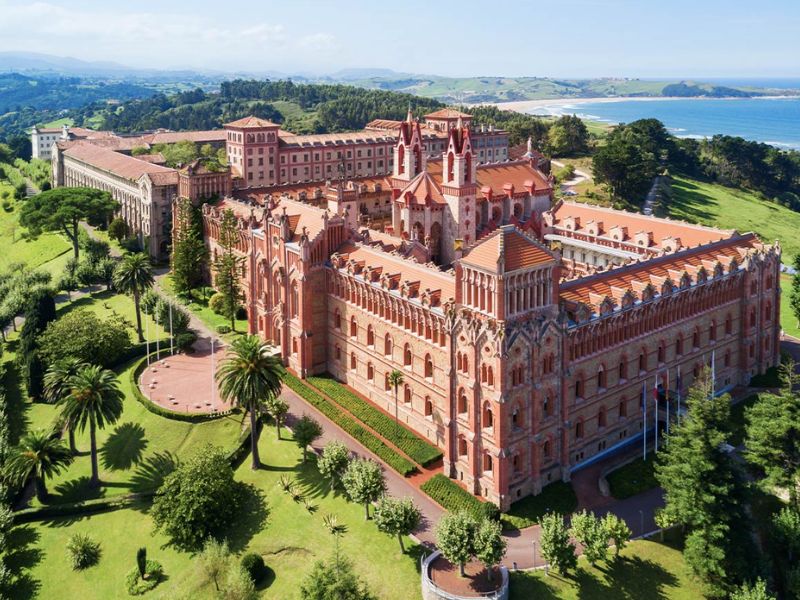
Gaudí’s El Capricho remains a must-see, but it’s worth exploring beyond it: the Sobrellano Palace, the Pontifical University overlooking the town, the Modernist cemetery with its Angel of Death… all within a radius of barely 500 meters, easily explored on foot in a morning.
Santillana del Mar
40 minutes from Las Cinco Calderas
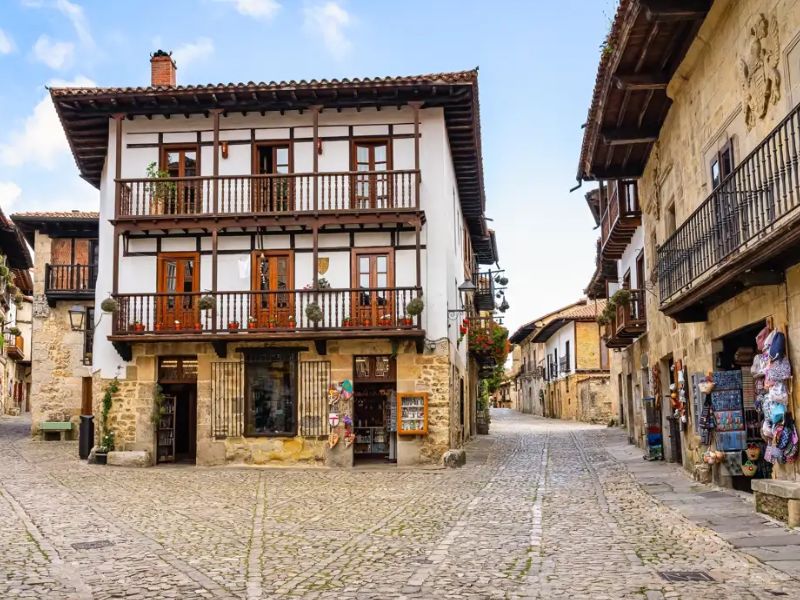
There’s a saying about Santillana that its name is full of lies: it’s neither holy, nor flat, nor by the sea. And so, with that touch of trickery, it’s one of the most beautiful villages in Spain. The village has stood since the 9th century, and almost everything you see today—the emblazoned facades, the wooden balconies, the stone doorways—dates from the 16th and 17th centuries, when the money arriving from the Americas left a final layer of splendor on the medieval village.
Everything is so well preserved that it sometimes seems like a movie set. But it isn’t. There’s a reason it’s such a popular tourist destination. The trick is to arrive early or at dusk, when the tour groups have left and the village regains some peace and quiet. The Collegiate Church of Santa Juliana, a 12th-century Romanesque church, is well worth a visit. It’s the origin of everything, including the village’s name. And just a few minutes away is the Altamira Museum, which we’ll talk about later.
Valles pasiegos
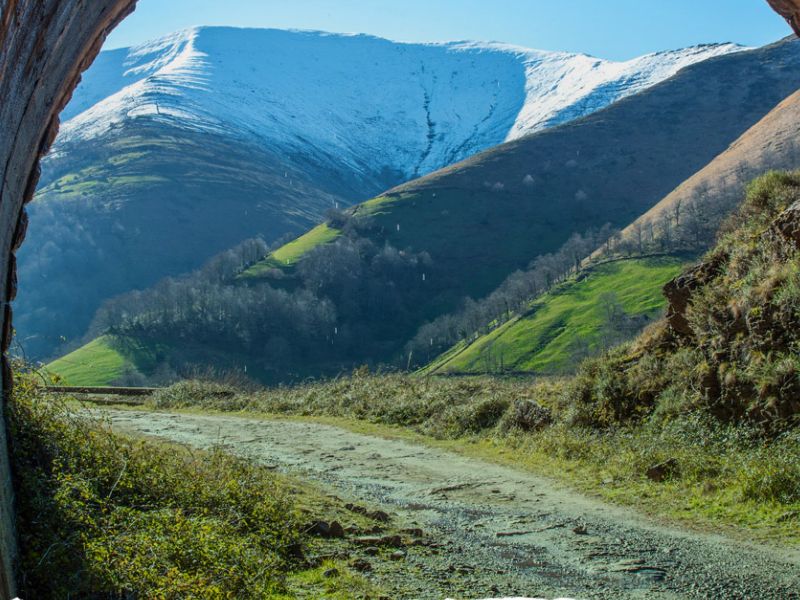
The Valles pasiegos don’t have a major monument to see, although they don’t need one. The plan here is to drive, stop whenever you feel like it, and look around. The landscape is an almost unreal green: endless meadows, cabins scattered across the hillsides, roads that rise and fall unexpectedly. It’s Cantabria inland, without a coast.
Day trip (also works in the rain)
A highly recommended circular route starts from La Casona and travels through the valleys → Villacarriedo → Selaya → Puerto de la Braguía → Vega de Pas → Puente Viesgo → return via the A-67. Key stops: in Villacarriedo, the Palacio de Soñanes (a spectacular Baroque palace in the middle of the valley, now a hotel and restaurant) is worth a stop, even just to admire it from the outside. In Selaya, you’ll find the best quesadas (cheesecakes) in all of Cantabria. The Puerto de la Braguía pass has viewpoints overlooking all three valleys (if there’s no fog, of course, and even if there is, it’s still quite charming). And Vega de Pas is the place to eat: hearty stews, local cheeses, and meat. Puente Viesgo completes the picture: a beautiful village that houses caves with Paleolithic cave paintings, which we discuss in the cave art section, and a centuries-old spa in case you have time for more.
Valle de liébana
About an hour and a half from Las Cinco Calderas
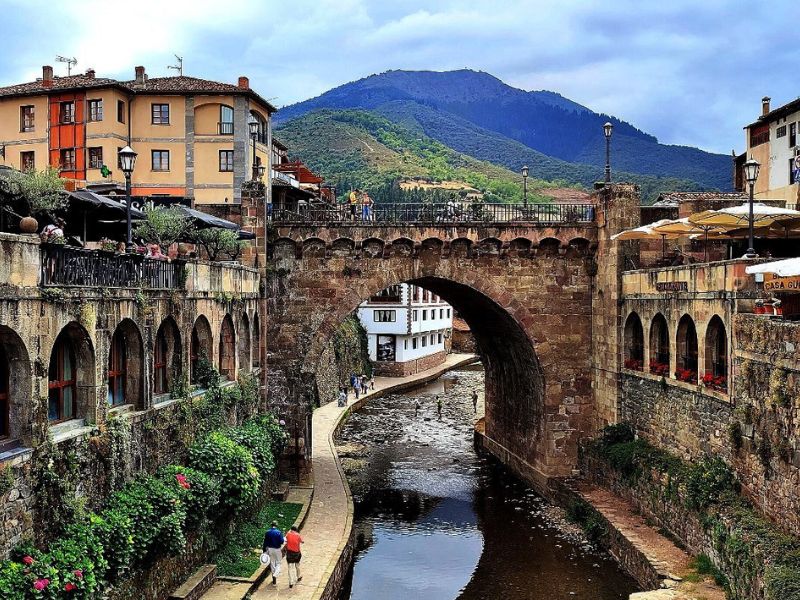
Valle de Liébana is a different Cantabria. More vertical, deeper, surrounded by the Picos de Europa mountains. The journey itself is part of the experience: the Hermida Gorge opens the valley like a narrow and dramatic gateway. Inside, Potes is the main town, with its stone architecture and bridges, but the surrounding area offers much more: the Monastery of Santo Toribio de Liébana, the Fuente Dé Cable Car, which ascends in 4 minutes to the Picos de Europa (up to 1,800 meters) and offers breathtaking views. It’s the furthest destination on this list, but if you set aside a whole day, it’s worth every kilometer.
A valley that doesn’t appear in brochures: Polaciones
About an hour or 30 minutes from Las Cinco Calderas
West of Cantabria, following the Nansa River along increasingly narrow roads, you’ll reach one of the region’s most unknown and authentic corners.
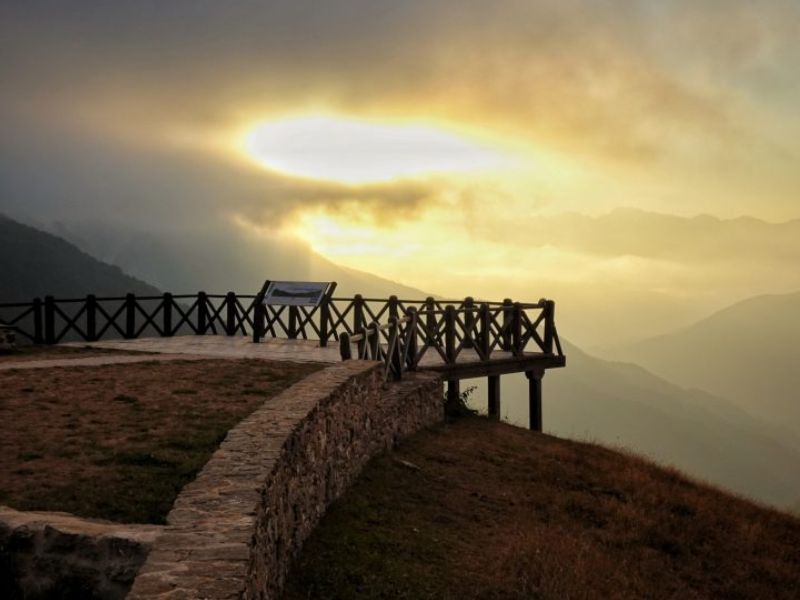
The Polaciones Valley isn’t geared towards tourists. Not yet. The Piedrasluengas viewpoint, at over 1,300 meters, offers one of the most expansive panoramas in Cantabria: the Picos de Europa, Peña Labra, Tres Mares, and the Liébana and Valdeprado valleys, all at once. Every autumn, on the edge of the Saja-Besaya Natural Park, the beech forests burst into color and the woods fill with the bellowing of stags during the rut, one of the most impressive natural spectacles in northern Spain.
Some of us behind Las Cinco Calderas are descended from here. Perhaps that’s why we think it’s important to mention it: because Cantabria has more layers than you can see from the coast, and Polaciones is one of the deepest.
Make your reservation at the best price and take advantage of the benefits on our official website
“A stroll through the Cantabrian valleys, stopping in some of these charming villages, is almost a must to discover Cantabria through its gastronomy and traditional culture”
Nature trails, beaches, city visits… Keep discovering the most charming plans near Las Cinco Calderas